
Article And Content Marketing 2026: The One-Piece Week
Yes, but not the way it is sold. Content marketing still produces traffic, leads and signups, and the odds on any single page are terrible: Ahrefs found 96.55% of indexed pages get zero Google traffic in its December 2023 study. What works now is one piece a week moved hard, with a video attached.
Before you spend a single evening on this, the real question is whether content marketing still moves the needle at all.
More traffic. More leads. More sales and signups.
Measurable, and worth the hours.
If the answer is no, I’d rather point you somewhere better than sell you a year of writing. So we settle that first, then the second question: whether somebody brand new with no list and no budget can actually pull it off.
Does Content Marketing Produce Results Worth The Time?
Yes. On a small number of pages, over a long window, and I’m not going to soften the odds on the way there.
Let me tell you how I learned it. I ran the article-directory model back when it was the best free traffic in this business, and never once stopped to ask why a company would hand out that much traffic for nothing. The answer, obviously, was that my article was their inventory. I was filling somebody else’s shelves and calling it a business.
Volume worked right up until it didn’t, and then it didn’t work at all.
Ahrefs put 96.55% of indexed pages at zero Google traffic in its December 2023 study of roughly 14 billion pages. Its May 2025 study found only 1.74% of new pages reach the top ten inside a year, and 72.9% of the pages already sitting there are over three years old.
Most pages do nothing.
The result comes from the few that land.
Even Ryan Law, who runs content at Ahrefs and is paid for you to believe otherwise, wrote in March 2025 that “affiliate marketing was a form of arbitrage, and all arbitrage opportunities are temporary. The window to easy profit has closed.”
Watch what the training companies do, too. Authority Hacker built its business teaching people to build affiliate content sites. Their homepage today, sells “No Hype AI and Automation for Established Businesses.”
They didn’t write a post about the model changing.
They changed businesses.
So why am I still telling you to do this?
One study almost nobody here will quote you. December 2025, an academic team at arXiv ran 55,936 queries across six LLM search engines and found they favor less popular domains than Google does, along with clean HTML, readable text and more outbound links.
Small and clear beating big and vague, for the first time in fifteen years. That gap is your opening.
Narrow, closing, and real today.
If The Answer Is No For You, Go Here Instead
Three honest exits. Take one if it fits, and don’t spend a year finding out the hard way.
Need results in ninety days? Wrong channel, and effort won’t change it. Buy traffic. Content compounds, which is a wonderful property and a terrible one when rent is due.
Would you rather talk than write? Lead with video and you’re not settling. Ahrefs measured 75,000 brands in December 2025, ranking what actually predicts showing up in AI answers, and YouTube mentions came out the strongest signal they tested. Stronger than backlinks. Stronger than domain authority. Eighteen years on my own channel is on the site, unflattering numbers included.
Want the fastest thing you own? Email. But something has to fill it, and that something is content, so you end up back here anyway. The rules are the hard part, not the writing.
Still here?
Good. The rest is the how.
Article Marketing vs Content Marketing, And Why It Hits Your Calendar
Article marketing was a dirt-moving business. Write a piece, spin it nine ways, shovel all nine into directories for the links, repeat next week. More pages, more traffic.
That was the theory.
Look up “scaled content abuse” in Google’s spam policies sometime, on a page they stamp as updated 15 May 2026, and you’ll be reading a description of that paragraph. I went through what Google actually bans, line by line on the SEO page.
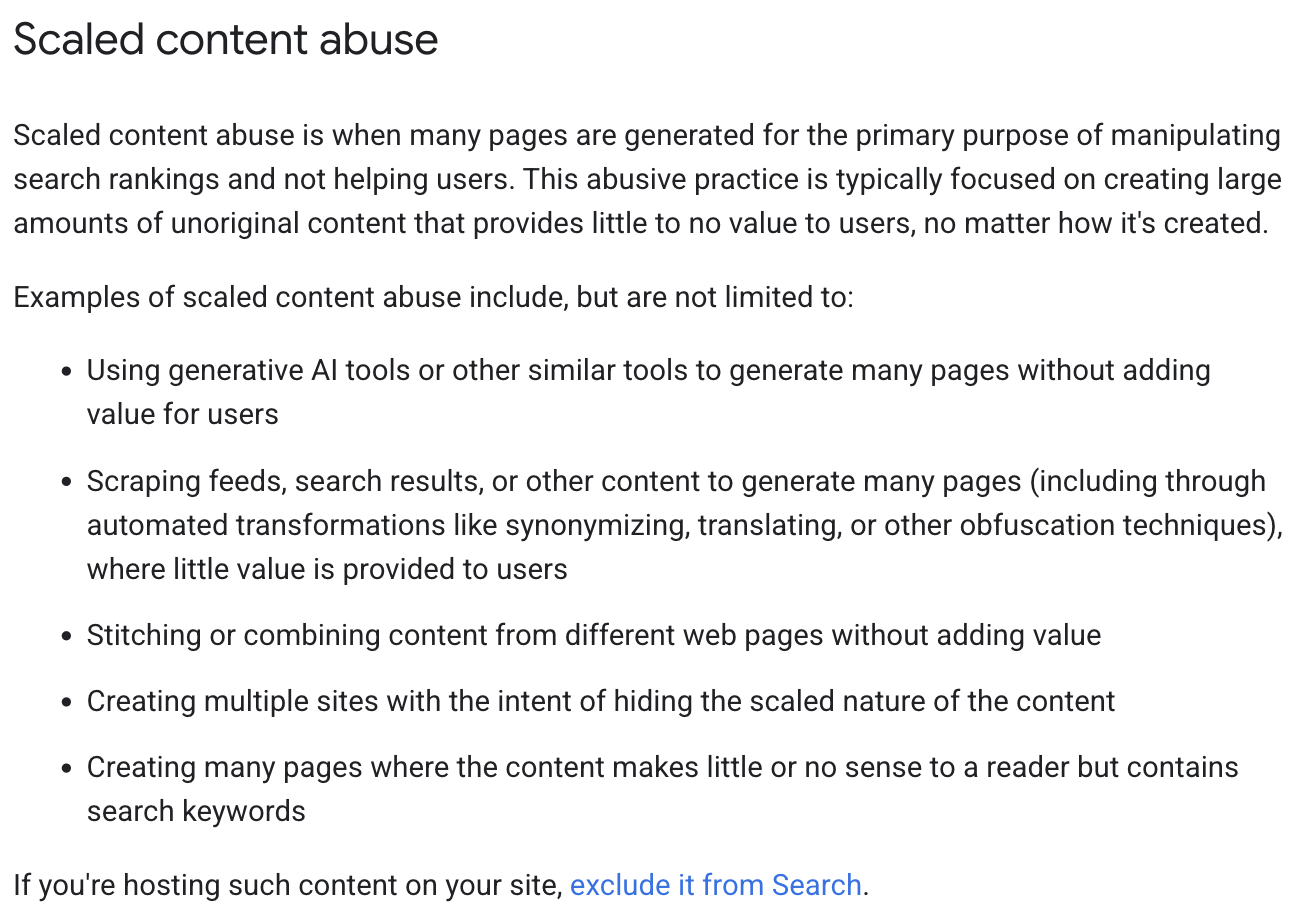
The playbook didn’t go out of date. It got written down as the definition of abuse.
Content marketing survived, and the difference lands on your calendar. One piece worked hard keeps paying. Five published and abandoned cost five times the effort and evaporate at the same rate.
That’s not philosophy. That’s your workload.
Which is why most new affiliates get this backwards. Volume feels like progress. Distribution feels like begging.
Now the number that should stop you cold. Ahrefs scored every factor in that study on a scale where 1.0 is a perfect match and 0 is no relationship at all, and the number of pages on your site came in at 0.19.
YouTube mentions, for comparison, came in at 0.74.
Not a percentage. A tracking score, and 0.19 is close enough to zero to call it noise.
The lever you’re pulling hardest is the weakest one anybody has found.
So Can You Leverage This With No List And No Budget?
Yes, and honestly the constraints help more than they hurt.
You don’t need money. Eleven dollars covers the whole first year. You don’t need an audience either, because building one is the entire point. And you don’t need to write well, which surprises people, because the thing that makes a beginner’s page worth reading is that it names a specific problem and solves it, not that the prose sings.
What you do need is twelve hours a week you’ll actually defend, one offer chosen before you start, and the discipline to publish once instead of five times.
Limited talent is the least of your problems. Limited patience is the whole game.
Because the one thing you can’t skip is the window. Twelve to twenty-four months before this carries weight, and going dark resets the clock. Everything else on this page is negotiable. That isn’t.
What Does This Look Like At Month Three, And At Month Twenty-Four?
The timeline is the decision. Everything else about content marketing is negotiable, so here is what exists at each stage and what it does for you.
| Where you are | What you have built | What it does for you |
|---|---|---|
| Week one | A domain and a page. About $11 committed for the year | Nothing yet, and it feels slower than posting to Facebook, because it is |
| Month three | A handful of pages, each answering one buying decision | The hours move from making to moving. One piece worked hard replaces five published and abandoned |
| Month twelve | Pages that keep answering after you stop paying, where an ad stops the hour your card declines | Warmer arrivals. Not more of them yet, but people who searched the question already care about the answer |
| Month twenty-four | Firsthand detail about something you have actually run | The narrow, real edge, because that cannot be regenerated from a prompt |
Two warnings sit inside that table and both are easy to read past.
The first is that it only works on pages about buying decisions. Tips pages got taken by the answer engines, and writing more of them in 2026 is publishing into a hole.
The second is a negative people insist on reading as a positive. Content marketing will not fix your conversions. It brings better people and hands them to whatever offer you already had. If that’s weak, you’ll blame the traffic.
Everybody does.
What Do You Write About When You Have Not Done Anything Yet?
The decision you’re making this week, written down while you make it.
That’s not a consolation prize. It’s the one advantage you hold. You’re standing inside the exact research a thousand other beginners are about to start, and you still remember what confused you. Somebody three years in has forgotten. You’re not the expert, you’re the guy two weeks ahead, and that’s close enough to help.
One gate holds: never write about something you couldn’t catch an AI being wrong about. “Here’s the step the docs skip” clears it on day one, in a way a content farm can’t fake.
Three things go in place first.
An offer you’ve chosen. Content pointed at nothing converts to nothing, and picking later is how people promote whatever emails them first.
Something you’ve actually opened. Week one is for running the free tiers. Not a delay, that’s the qualification.
A written editorial standard. One page. We’ll get to it.
From month two you stop choosing topics at all. Nathan Barry’s flywheel takes over: your welcome email asks one question, the replies say what people are stuck on, and next week’s piece arrives written in somebody else’s words.
That’s the real answer to “I can’t write.” Most of this job is answering mail.
The One-Piece Week
One piece. Four hours making it, eight to ten hours moving it. The ratio is the whole model.
1-2 hrs. Pick a decision, not a topic. Something a buyer is trying to settle, in the words they’d actually type. “Is this tool worth twenty-five dollars a month” beats “ten tips for beginners” every time, because the tips page is what the AI answer ate.
3-4 hrs. Write it against your standard. Not from a blank page, not from one giant prompt. Ryan Law published his Ahrefs process in August 2025: rules in files loaded as reference, a short brief you write yourself, the outline approved before drafting, then section by section.
5 hrs. Publish on a domain you own, with an email box on the page. Not Medium. Not only Facebook. Everything else is rented.
6-8 hrs. Turn the same piece into one video. Same argument, said out loud. That’s where the strongest signal in the whole study lives.
9-14 hrs. Run the distribution sequence. Ross Simmonds published a six-day post-publish playbook at Foundation that has held up: day three into communities where the question already gets asked, day four newsletter and reshares, day five outreach to anyone you cited, day six the remix into a carousel, a short, a document. A remix re-enters at the top and gets treated as new.
15 hrs. Read the replies. Pick next week’s decision.
One piece. That’s your week.
What Does The Whole Stack Cost?
| What you need | The option | What it gives you |
|---|---|---|
| A domain you own | Porkbun .com, $11.08 a year, no renewal jump | The only piece nobody can take from you |
| Somewhere to publish | systeme.io free plan, $0 | 2,000 contacts, one blog, three funnels, one custom domain, unlimited sends. No card, no expiry. Read on their pricing FAQ 17 August 2026 |
| Search data | Google Search Console and Bing Webmaster Tools, both $0 | What you rank for. Bing’s AI Performance report, in preview since 10 February 2026, shows the phrases an AI used when it cited you |
| Video | YouTube, $0 | The strongest AI-visibility signal in the correlation data |
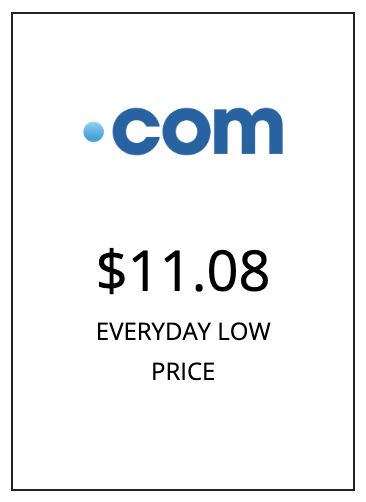
One line item costs money. So the budget isn’t what stops anybody.
The evenings are.
And notice what’s missing. No course, no funnel bundle, no subscription. Anybody telling you otherwise is selling a shovel before you’ve found the claim. I sell shovels too, which is exactly why I’m telling you when you don’t need one. What I run and what it costs is written up separately, disclosure and all.
Automate Half Of It, And Not The Half You’d Guess
Half.
And not the half you’d guess.
Automate the research, the brief, the outline, the section drafts, the repurposing, the scheduling. Do not automate the judgment, the topic choice, or the decision to hit publish.
Ahrefs studied a million pages from 100,000 search results in July 2026, and the numbers beat the arguments. Pages under 50% AI-written made up 82.2% of all top-three rankings, only 5.3% were fully AI-generated, and the low-AI pages drew two to three times the organic impressions of the heavy ones.
Nobody is looking for good information. They’re looking for great value.
And the failure has a shape you can see coming. A burst of thin AI pages gets crawled fast, ranks briefly, then drops out of the index entirely. Google grants crawl budget and Google takes it back. There’s a whole page on the gap AI really closes, and the one it leaves open, but the short version is that AI closes the production gap and leaves the judgment gap wide open.
The judgment gap is what kills people.
Check Who Paid For Every Number On This Page
Start with the one holding up half my argument.
Ahrefs filtered that 75,000-brand study to sites with a Domain Rating above 40. Yours won’t be. So those two scores describe established brands and say nothing, strictly, about a site you launched last Tuesday. I use them because they are the best measurement that exists, not because they prove anything about you.
Nearly every traffic figure here comes from a company that sells SEO software.
Not a disqualification. A discount rate.
Then there is the finding that cuts against this very page. SE Ranking looked at 216,524 pages in November 2025 and found that pages carrying FAQ sections averaged fewer AI citations than pages without - 3.8 against 4.1 - with question-style headings doing worse than plain ones, 3.4 against 4.3.
So I acted on half of it and hedged on the other half, and you should know which is which.
This page carries no FAQ block, and that is why. Question-shaped headings I have trimmed rather than abandoned: five of the thirteen here, down from six, kept where the heading is the exact thing somebody types into a search box.
A 3.4 against 4.3 is a real gap and a modest one, and a heading that matches the reader’s question still earns its place. Split the difference, say so out loud, and let you weigh it.
One more. I have not run this exact model start to finish on a new domain and measured it.
The Week Nobody Warns You About
Picture week nineteen.
Nothing has happened. Fourteen pages published, the traffic graph is a flat line with a couple of hopeful bumps on it, and somebody in a Facebook group has just posted a screenshot of results from a channel that pays this month. Week nineteen is where this plan gets abandoned, every time, and almost never in week one.
The people who get through it have one thing in common: a weekly commitment smaller than their ambition. One piece they can keep on a bad week. Not five they can’t.
So this page belongs to you if you can hold a weekly cadence for a year, and you would rather write and talk than buy ads.
It belongs to somebody else if a good week means a big number of things published. That scoreboard is the whole problem, and you will reach for it every time the graph goes flat.
And it belongs to nobody at all if the plan is a hundred pages. Google’s policy was written against that plan, word for word.
Most people quit long before the lag ends.
A scheduling problem, mostly. Not a character one.
Your One-Piece Week Plan
This is week zero. The weekly loop starts after it.
- This afternoon, register the domain. Your name or your niche, not a keyword string. Do it before anything else, because this is the step people postpone for a year hunting the perfect one.
- Pick the offer before you write a word. Provisionally is fine. Just not later.
- Open the free accounts and put an email box on the page. Publishing, Search Console, Bing Webmaster Tools. Capture goes up day one, not once you have “enough traffic.”
- Take notes the whole time you’re setting up. Where you got stuck, what the docs skipped. That file is your first three articles and it expires in about a month, once you stop being new.
- Write your editorial standard. One page, including what you’re legally allowed to say about income, which for an affiliate is the line that costs most to cross.
- Put the weekly block in the calendar as an appointment, not an intention. CreatorMap studied over 50,000 YouTube channels in June 2026 and found the longest gap between uploads was the strongest negative predictor of growth in the whole dataset. Breakout channels’ longest hiatus ran about 35 days. Stalled channels ran 200. The calendar is what keeps you off that second number.
Then run the week. Every week.
You’re not behind. You’re early, on a smaller board than the one you were sold, and a smaller board is easier to win.
The Best Starting Point Right Now
A registered domain plus the free plan at systeme.io, both prices. It wins on one thing: it’s the cheapest arrangement that leaves the asset in your name, and ownership is how any of this compounds.
It’s wrong for you if you won’t publish weekly. At two posts a quarter, buy traffic instead. I’d rather say that than take the click.
The runner-up is YouTube first, site second. That becomes the right call the moment you admit you’d rather talk than write, because a video you actually record beats an article you keep meaning to. One condition: register the domain anyway and point the description at it, so the audience has somewhere of yours to land when the algorithm moves.
And the cheaper option here isn’t the free one. Publishing on somebody’s platform costs nothing today and costs you the whole audience later. Same bill I paid the article directories, itemized differently.
That’s what eleven dollars buys. Not hosting. Standing.
Bless and be blessed,

Sources
- Google Search Central, Spam policies for Google web search - checked Aug 23, 2026
- Ahrefs, What correlates with AI brand visibility, 75,000 brands (vendor data) - checked Aug 17, 2026
- Ahrefs, Google doesn't punish AI content, one million pages (vendor data) - checked Aug 17, 2026
- Ahrefs, How long does it take to rank in Google (vendor data) - checked Aug 17, 2026
- Ahrefs, 96.55% of pages get no traffic from Google (vendor data) - checked Aug 17, 2026
- Ahrefs, Why ChatGPT cites pages, 1.4 million prompts (vendor data) - checked Aug 17, 2026
- Ahrefs, SEO is still your best marketing channel (vendor commentary) - checked Aug 17, 2026
- Zhang, Ye, Peng, Garimella and Tyson, LLM search engines versus traditional search engines, arXiv 2512.09483 - checked Aug 17, 2026
- CreatorMap, What makes a YouTube channel grow, 50,000+ channels (vendor data) - checked Aug 17, 2026
- Ross Simmonds, The Modern Distribution Playbook - checked Aug 17, 2026
- Nathan Barry, Creator flywheels - checked Aug 17, 2026
- Ryan Law, My complete AI content process for Ahrefs - checked Aug 17, 2026
- Authority Hacker, about page and current positioning - checked Aug 17, 2026
- SE Ranking AI citation study, reported by Search Engine Journal (vendor data) - checked Aug 17, 2026
- systeme.io pricing page and FAQ - checked Aug 17, 2026
- Porkbun .com domain pricing - checked Aug 23, 2026
- Microsoft, AI Performance in Bing Webmaster Tools - checked Aug 17, 2026