
Make Money Blogging: Do Blogs Still Build MLM and Affiliate Sales?
Yes, a blog still grows an MLM or affiliate business, and it is the only channel you own outright. One post that answers a buying question keeps sending traffic and leads for years. systeme.io bundles blog, funnel and list free; WordPress and Ghost win on portability. AI drafts, your judgment decides.
Full disclosure: I am a systeme.io affiliate and earn a commission if you ever move to a paid plan through a link on this page. The free plan I actually recommend below pays me nothing.
Will a blog actually get you more traffic, more leads and more sign ups - or is it one of those things people keep recommending because it worked for them back in 2012?
Fair question.
Ask it about everything.
I ran a blog with over 400 published posts, and for years it paid the bills and fed the dog. The site you are reading right now is the rebuild, written with AI in the loop at every step. So I am not going to argue theory with you.
I am going to show you the machine.
What Does a Blog Do for Your Business?
One thing, mechanically: it lets people who are already looking for what you sell find you, instead of you chasing them. A post that answers a buying question works around the clock, for years, whether you show up that day or not. No other channel in this business does that.
Think about what you actually do all week. You answer questions. What does it cost, is it legit, how does the comp plan work, will this work for someone like me. You answer them one at a time, in DMs and on calls, and every answer evaporates the moment you hit send.
A blog is those same answers, written down once.
Findable forever.
Social is the opposite shape. A post there reaches more people faster than a blog ever will on day one, and it is gone by Thursday. You are also building on ground someone else can bulldoze. Use social to meet people. Use the blog and your email list to keep them.
Do the Top Producers Blog?
Some do. Most don’t.
And the reason why is worth more to you than the statistic.
Nobody audits top-earner marketing methods, so I will not hand you a made-up percentage. What I can tell you from thirty years of watching this industry up close is that the biggest recruiters mostly build on speed - calls, events, social, ten to thirty exposures a day. They can afford to. A full-time job, and it is theirs.
You probably have ten hours a week.
You cannot outwork those people.
A blog is how you stop trying. I have personally sponsored and referred 230 people over my career, and I did not find most of them. They found me. That is attraction marketing, plain and simple, and the blog was the engine behind it. On the old blog I could watch the mechanism in my own stats: 2,900 people searching one phrase every month, 580 of them landing on my post. Old numbers, from a dashboard I no longer run.
The mechanism has not aged a day.
The producers who do blog tend to be the tool sellers, the trainers, the affiliates - the merchants, not the miners. If your plan is affiliate commissions or a hybrid of product sales and recruiting done part-time, you are in exactly the group blogging serves best.
Is Blogging Worth Ten Hours A Week?
Only if you can look at what it takes and what it returns in the same glance. So here they are in the same glance.
| What it takes from you | What it hands back |
|---|---|
| Three to five hours a week, in my experience, indefinitely. AI cuts the drafting, not the slot in your calendar | Traffic that keeps arriving after you stop paying for it. Entry runs $0 to about $10 a month, priced from vendor pages on 22 August 2026 |
| Months of publishing before any flow starts, and honesty on every one of them, because it only works if the post answers what was actually asked | A reader who searched the question and showed up already caring about the answer. Warmer than any cold DM you will ever send |
| Firsthand experience you have to go out and get before you have anything to feed it | A post that compounds, carrying detail no competitor can copy off the same model you are both running |
Read the left column first. A blog saves you nothing this month.
The cheapest traffic you will ever buy, and the slowest, and both halves of that sentence are true at once.
Which Platform Should You Build On?
Short version: systeme.io free if you want blog, funnel and list in one login for zero dollars. WordPress if owning and moving your content matters most. Ghost if writing is the whole product. And the stack this site runs on - Astro on Cloudflare Pages - is free and fast, and I only recommend it if Git does not scare you.
Every price below comes off the vendor’s own page.
| Platform | Price today | What you get | The catch |
|---|---|---|---|
| systeme.io | Free, then $17, $47 or $97 a month | 1 blog, 3 funnels, 2,000 contacts and email sending on the free plan | Your content lives in their editor, not in files you hold |
| WordPress, self-hosted | Software free; Bluehost hosting from $3.99 a month on a 36-month term, renewing at $9.99 | The biggest ecosystem on the web, and everything exports | You are the IT department: updates, backups, security |
| Ghost | Ghost(Pro) Starter at $18 a month billed yearly; free if you self-host | A beautiful writing-first platform with memberships built in | The Admin API that lets an AI publish for you is not included on Starter |
| Astro plus Cloudflare Pages | $0. Free plan carries unlimited bandwidth and 500 builds a month | Total control, extreme speed, content as plain files in Git | No editor, no dashboard. It is code, and nobody is coming to help |
If you would rather pay someone to host WordPress for you, WordPress.com’s Personal plan runs $4 a month billed yearly, $9 billed monthly, off their pricing page the same day.
Now the 2026 wrinkle most platform roundups have not caught up with. The question is no longer just “can you write posts on it.” It is “can your AI assistant operate it.”
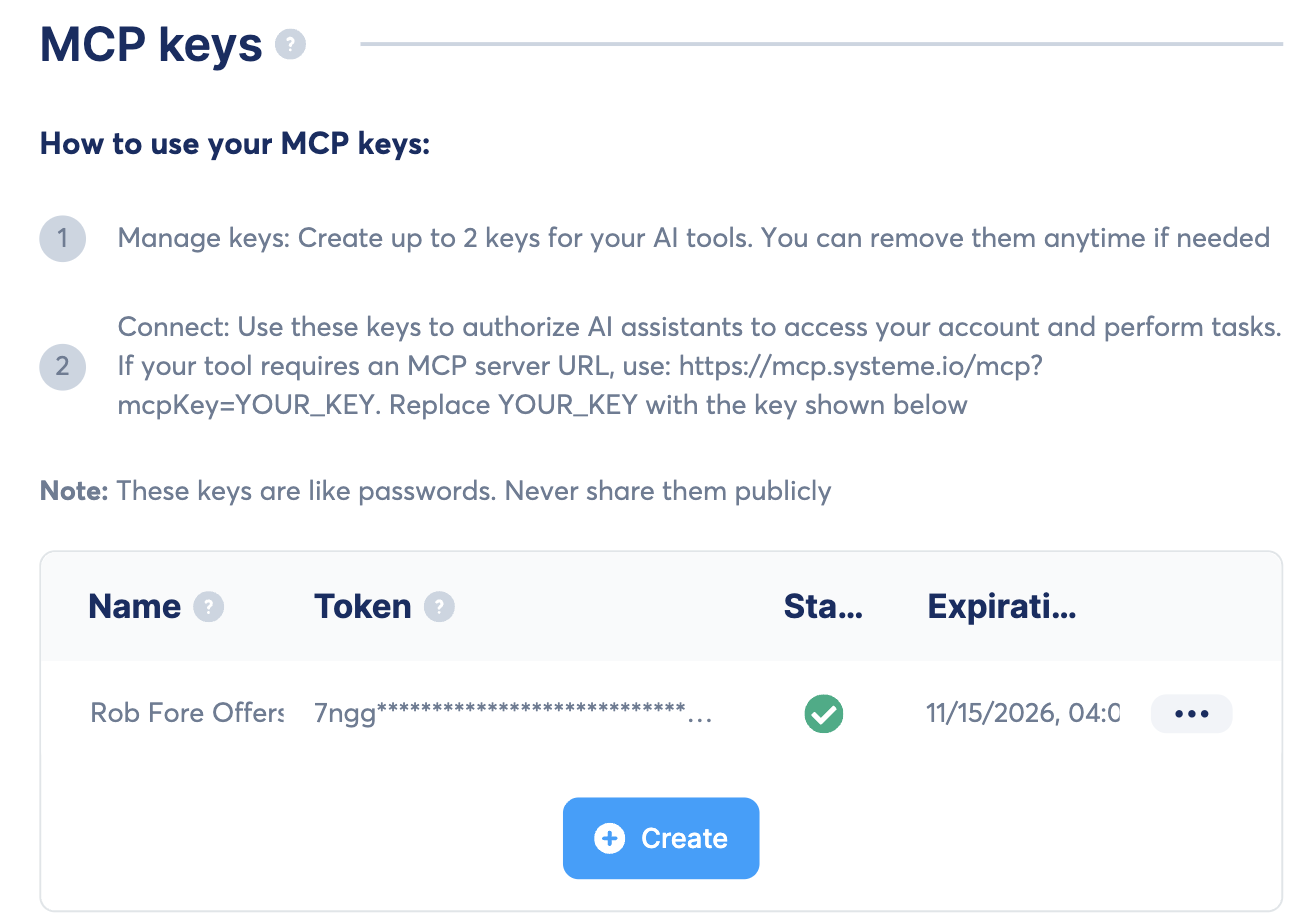
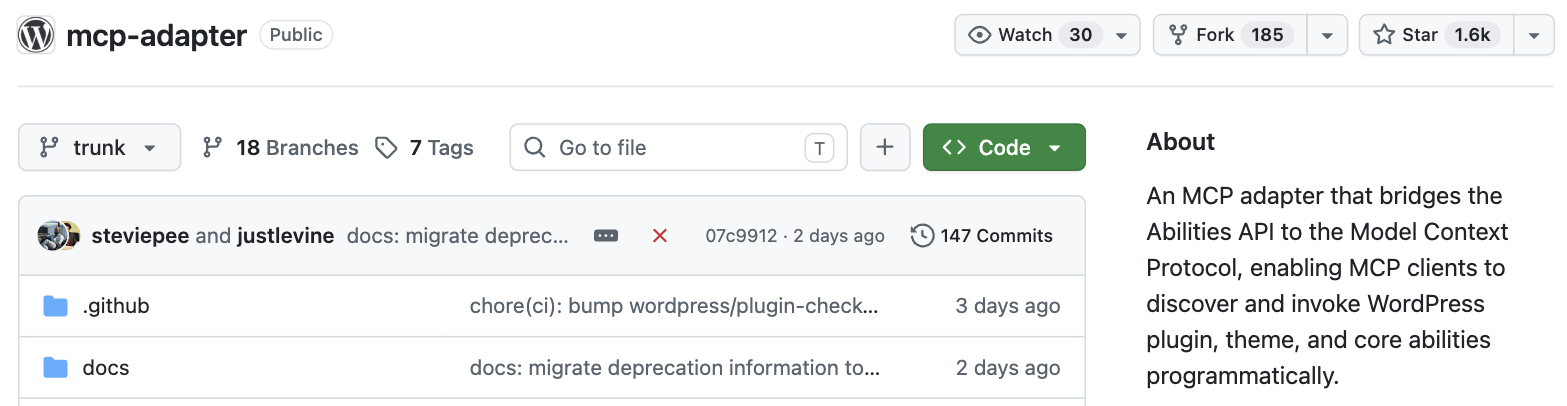
systeme.io ships an official MCP server - their help center documents connecting your account to Claude or ChatGPT under Settings, then MCP and API keys, in articles updated 18 August 2026. I have mine wired into Claude, and from a chat window it can read my contacts, tag buyers, and build funnel pages. WordPress has had a REST API in core for years, and its official MCP work now lives in the WordPress mcp-adapter plugin, which replaced an earlier Automattic project archived this January. Ghost’s Admin API can do “everything Ghost Admin can do,” per their docs - on a self-hosted install or their $29 Publisher tier, not the $18 Starter.
And my Astro setup needs no API at all, because every post is a markdown file that Claude edits and commits directly. This page got here exactly that way.
For the deeper look at the all-in-one option, my full systeme.io review covers what the free plan does and does not include.
How I Use AI to Research, Write, Publish and Track
Four stages, and the machine runs the first, third and fourth almost by itself now.
Research. I hand the AI the question the post has to answer and have it pull what is already ranking, what those pages get wrong, and what a buyer would still be nervous about. Then comes the step that separates a real post from slop: every price, policy and percentage gets checked against the vendor’s own page, that day, with the date written into the sentence. A model will quote you a stale price with the same straight face as a current one. Checking is your job.
Write. AI drafts. I rewrite. The opening, the closing, the opinions and every firsthand detail are mine, because the parts only you could have written are the parts that rank, convert and get quoted by the assistants your prospects are now asking instead of Google. Publish raw AI output at volume and you are describing what Google’s spam policy, updated 15 May 2026, calls scaled content abuse: “many pages… generated for the primary purpose of manipulating search rankings and not helping users.” The full breakdown of that policy line by line is in SEO for affiliate marketers.
Publish. Through whichever door your platform opens: the MCP connection on systeme.io, the mcp-adapter or REST API on WordPress, the Admin API on Ghost, or a straight Git commit on a static site like this one.
Track. Google Search Console for impressions and queries, one lightweight analytics tool for visits - I run Plausible - and your email list for the number that actually matters, which is leads. Bing Webmaster Tools now has an AI Performance report showing when AI assistants pull answers from your pages, and that is worth watching monthly, because it is the new traffic nobody’s dashboard was built for.
The wider AI toolkit, with prices and what to buy first, is in affiliate marketing with AI.
Three Prompts to Steal This Afternoon
You do not need a course. You need a starting point and an honest hour. Here are the three prompts I would run first, in order.
Find the post worth writing:
I sell [product/opportunity] to [who buys it]. List the 15 questions a serious buyer asks right before spending money - the ones they type into Google or ask an AI assistant. For each: what does the asker already believe, what are they afraid of, and what evidence would settle it? Rank them by how close they sit to the buying decision. Do not invent statistics or search volumes.
Draft it in your voice, with your facts:
Interview me before you write anything. Ask one question at a time about my real experience with [topic] - what I tried, what it cost, what went wrong, what surprised me - until you have enough material for a 1,500 word post. Then draft it using only my answers plus facts you can attribute to a named source with a date. Mark every number [VERIFY]. Short paragraphs. No hype.
Upgrade a post you already have:
Here is a post from my blog: [paste it]. Keep every fact and opinion mine. Rewrite the opening so the first 100 words answer the title's question outright in 40 to 60 words. Turn a third of the subheadings into questions a buyer would actually ask, each answered directly underneath. Then add a 5-question FAQ with 25 to 50 word answers a reader could quote on their own.
The second one is the whole trick. Most people prompt “write me a blog post about X” and get the same beige paragraphs as everyone else who typed it. Make the AI interview you first and the raw material becomes your life instead of its training data.
What I Can Show You, And What I Can’t
I can show you thirty years, and a blog that once ran to over 400 posts and paid the bills and fed the dog. Most of those are gone now - I deleted them in a rebuild rather than leave a decade of stale offers and dead links standing. What is here is what I am willing to stand behind today. I can show you four platforms an AI assistant can operate through an official MCP or API, priced and dated. That filter is why your favorite might be missing: four, not forty.
Here is the other side of the ledger.
This site’s own traffic curve, I cannot show you. The rebuild is young. Ask me in a year and I will publish whatever it says, flattering or not.
Nor can I promise the AI and MCP details hold. Every fact here carries its check date for exactly that reason. Reading this in 2027? Verify before you build anything on top of it.
And no income numbers appear on this page anywhere.
Deliberately. Blog earnings swing so hard by niche and by offer that any figure would mislead more than it informed. What online income actually looks like is its own honest conversation.
Two Questions Before You Start
Do you keep answering the same prospect questions over and over in messages?
Then you already have the content. A blog stops it evaporating, that is the whole trick. Same answer if you are part-time and tired of channels that reset to zero every morning, because this one compounds instead.
Will you rewrite an AI draft in your own words?
Answer that one honestly. A blog of raw model output reads like everyone else’s and ranks like it too, and no amount of publishing volume fixes it.
One more, and this is the one people argue with. Where your business already runs on a warm market and a phone that never stops ringing, keep closing. A blog fixes a problem you do not have.
Still here?
Then let me say the encouraging part plainly. You are not starting from a blank page. Every question a prospect has ever asked you is a post title, and the writing already happened, in a hundred conversations.
Now it just needs an address.
Your First Blog Plan
- Write down the ten questions prospects actually ask you before they buy. From memory, from your DMs, from your last three calls. Costs nothing, takes twenty minutes, and it is your content calendar for ten weeks.
- Pick your platform with one rule: the one you will use this week wins. Zero budget, one login: the systeme.io free plan. Ownership and plugins: WordPress from around $4 a month. Both priced 22 August 2026.
- Buy your own domain, even on a free plan. Ten to fifteen dollars a year, and it is the one asset that survives every platform decision you will ever change your mind about.
- Run the first prompt and pick the question sitting closest to the money.
- Run the second prompt, then rewrite the opening and closing yourself and check every number against a named source before it ships.
- Connect a capture form and an email autoresponder before you publish post one. Almost everybody skips this, and it is the skip that turns a working blog into a hobby - traffic without a list is applause you cannot spend.
- Set up Google Search Console and one analytics tool on day one, because you cannot see compounding without a baseline, and month four is when the graph starts telling you the truth.
- Publish weekly on a schedule you can hold for a year. Review impressions and new leads monthly. Ignore income entirely until the leads are steady.
Your First Move This Week
For most people reading this: start free on systeme.io, at $0 on their pricing page. It wins because the blog, the funnel and the email list live in one account, nothing costs money until something is working, and the official MCP connection means your AI assistant plugs straight in.
It is the wrong pick if holding your content matters to you the way it matters to me. Their editor is their editor, and a move later means copying and pasting your way out. If that thought bothers you now, it will bother you more in year three - start on self-hosted WordPress at $3.99 to $9.99 a month instead and own every word from day one.
A blog is a stone wall. Every post is one rock, no single rock ever looks like progress, and the wall is either standing there in five years or it is not. I stacked 400 of them once. It held up long enough to change my life, and I am out here stacking again.
One rock this week. The whole assignment.
Bless and be blessed,

Make Money Blogging FAQs
Do you need a blog to succeed in network marketing?
No. Plenty of builders grow entirely on social and the phone. A blog is how you compete when you cannot outwork anyone. A post answers buying questions around the clock, which is worth more to a part-timer with ten hours a week than to a full-time recruiter.
What is the best free blogging platform for affiliate marketers?
systeme.io's free plan is the strongest zero-dollar package I know of: one blog, three funnels, 2,000 contacts and email sending in one account, per their pricing page. The trade is that your content lives in their editor rather than in files you hold.
Can AI write your blog posts for you?
It can draft them. Publishing those drafts unedited is the mistake, because Google's spam policy targets pages generated mainly to manipulate rankings rather than help people. Use AI for research, structure and speed, then add what only you know and verify every number.
How often should you publish on a new blog?
Weekly, on a schedule you can hold for a year, beats daily for a month followed by silence. Search traffic compounds on consistency. One researched post answering a real buying question outperforms five thin ones, and it converts into a video and an email besides.
Is WordPress better than systeme.io for blogging?
WordPress wins on ownership and portability: your content exports cleanly and hosting starts around $4 to $10 a month. systeme.io wins if you want blog, funnel and email list in one free account. Pick the one you will actually use this week.
What is an MCP and why does it matter for bloggers?
MCP, the Model Context Protocol, is a standard that lets an AI assistant operate your tools directly - read contacts, build pages, manage campaigns - instead of you copying and pasting between windows. systeme.io and WordPress both ship official MCP support.
How do you know if your blog is actually working?
Track three numbers monthly: search impressions and clicks in Google Search Console, and new subscribers on your email list. Leads are the honest early metric. Income lags too far behind to steer by in the first year, and steering by it is how people quit.
Sources
- systeme.io pricing page and pricing FAQ, last updated April 2026 - checked Aug 22, 2026
- systeme.io help center, public API key and MCP articles, updated 18 August 2026 - checked Aug 22, 2026
- Bluehost shared hosting pricing - checked Aug 22, 2026
- WordPress.com pricing - checked Aug 22, 2026
- WordPress REST API developer documentation - checked Aug 22, 2026
- WordPress mcp-adapter, the canonical MCP plugin for WordPress - checked Aug 23, 2026
- Ghost(Pro) pricing - checked Aug 22, 2026
- Ghost Admin API documentation - checked Aug 22, 2026
- Cloudflare Pages plans and limits, page dated 16 July 2026 - checked Aug 22, 2026
- Google Search Central, Spam policies for Google web search, page updated 15 May 2026 - checked Aug 22, 2026